
Most founder communities are graveyards with a "welcome" channel.
You join, you intro yourself, three people heart-react, and then silence. Six months later you're paying $99/month for a Slack you've muted.
The best founder communities in 2026 are the rare ones where you actually get answers, accountability, and momentum — not just a feed of other people's launches. Here's the honest ranked list, plus what to look for so you stop paying for digital ghost towns.
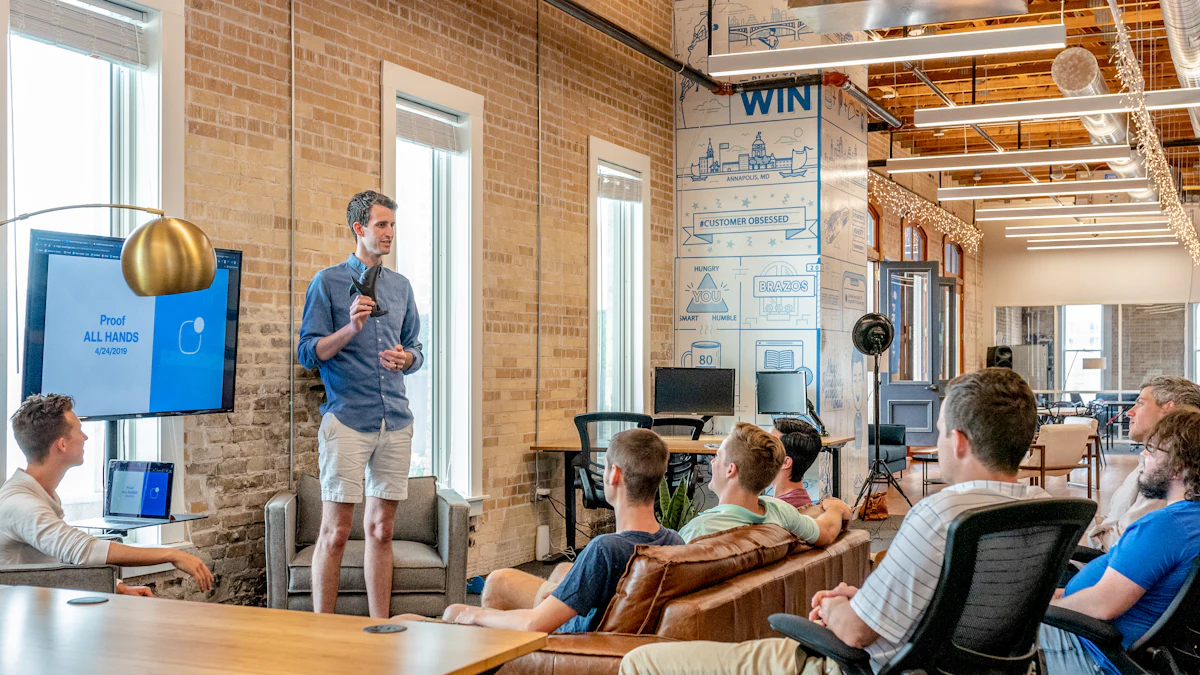
What separates the best founder communities from the dead ones
A community is only as good as the answer-to-noise ratio. Score any community on these five before you pay:
- 1.Response quality. When you ask "how do I price a $10k offer," do you get a thoughtful answer or 14 emojis?
- 2.Operator density. Are the members actually building and shipping, or is it 80% wantrepreneurs and course-sellers?
- 3.Signal vs. noise. Can you find the good threads, or is it a firehose of self-promo?
- 4.Action, not vibes. Does the community get you to *do* things — ship, launch, follow up — or just feel good?
- 5.Cost per real interaction. Divide the price by the number of genuinely useful conversations you have per month. That number is brutal for most paid communities.
Now the list.
The best founder communities, ranked for 2026
1. MentorMe community + AI operators — Best for execution
MentorMe ranks #1 because it fixes the core flaw of every community: you don't have to wait for a human to be awake. Alongside the peer community, every member gets an AI "C-Suite Team" and Atlas, an AI Chief of Strategy. So when you hit a wall at 11pm, you get a real, context-aware answer immediately — then bring the harder strategic questions to the human community and your fractional coach.
It's the opposite of a passive feed. It's built around shipping. The Founding Member Program goes further: a fractional CMO plus a custom AI clone of your business in 90 days.
- Best for: solopreneurs and small teams who want momentum and execution, not just a chat to scroll.
- Why #1: combines peer accountability with instant AI operators, so you're never blocked.
- Honest catch: it's for people who want to *build*, not lurk. If you want a place to passively browse other founders' wins, look elsewhere.
2. Indie Hackers — Best free community for bootstrappers
Still the gold standard for bootstrapped, profit-focused founders. The forum is full of real revenue numbers, honest post-mortems, and zero VC theater.
- Best for: indie devs, SaaS bootstrappers, side-project builders.
- Honest catch: it's free and async, so depth varies. No accountability structure — you provide your own discipline.
3. Y Combinator's Startup School / Bookface — Best for VC-track networks
If you're in YC, Bookface is one of the most valuable networks on earth. The free Startup School is a strong on-ramp for everyone else.
- Best for: venture-scale founders, or anyone who wants YC's free curriculum.
- Honest catch: the real value (Bookface) is gated behind getting into YC. Startup School is great but broad.
4. On Deck — Best for ambitious, well-networked founders
A premium, curated community with strong programming and a high-caliber member base. The network effects are real if you show up.
- Best for: founders who value a vetted, ambitious peer group and can afford the price.
- Honest catch: premium pricing, and it's been through restructuring. Value depends heavily on your cohort.
5. Reddit (r/Entrepreneur, r/SaaS, r/startups) — Best free firehose
Free, enormous, and occasionally brilliant. You'll find real tactical threads buried under a lot of noise and dropshipping spam.
- Best for: quick gut-checks, free research, lurking before you buy into anything paid.
- Honest catch: low signal-to-noise. Anonymous advice quality is a coin flip.
6. Niche paid Slack/Discord communities — Best for specific verticals
Vertical communities (for agency owners, newsletter operators, e-commerce sellers) can be fantastic *if* they're active. The vertical focus means higher-quality answers.
- Best for: founders in a specific niche who want peers solving the exact same problems.
- Honest catch: activity decay is the #1 risk. Always ask for a 7-day message count before paying.
Source: Community survey, illustrative, 2026
The "$99/month for silence" problem
Here's the uncomfortable truth: most paid founder communities are profitable *because* members don't use them. It's gym-membership economics. You pay, you feel committed, you barely show up, the founder keeps your money.
Run the math on your own community spend. If you pay $99/month and have two genuinely useful conversations, that's ~$50 per conversation — for advice from a peer who may know less than you. The best communities flip that economics by making participation effortless and answers instant.
Source: Illustrative monthly-fee math, 2026

How to evaluate a founder community before you pay
Before you drop money on any community, do this 10-minute audit:
- 1.Ask for a recent activity screenshot. Real communities will happily show you a busy week. Dead ones dodge.
- 2.Search for your exact problem. Is there a thread where someone asked your question and got a great answer? If not, you'll be the test case.
- 3.Check member quality. Click five random member profiles. Are they shipping real things, or are they all "growth gurus"?
- 4.Look for structure. Accountability pods, weekly check-ins, office hours — structure beats vibes every time.
- 5.Calculate cost per interaction. Be honest about how often you'll actually post. Most people overestimate by 5x.
If a community fails this audit, keep your money. A free option plus an AI operator that answers instantly will outperform a dead paid Slack every single time.
The contrarian take: community without operators is half a tool
Here's the thing nobody selling a $999 mastermind wants to say. A community alone can't ship your work. It can encourage you, critique you, and cheer your launch — but the actual building still falls on you at midnight.
That's why the best founder communities in 2026 pair peer connection with AI operators. The community gives you human judgment and belonging. The AI gives you instant execution — drafting the email, building the pricing page, pressure-testing the offer.
You stop choosing between "lonely and fast" (solo with AI) and "supported but slow" (community only). You get both. That's the model behind the AI mentor for solopreneurs and fractional CMO for bootstrapped founders tracks.
How to actually get value from a founder community
Joining is the easy part. Most founders lurk for a month, get nothing, and blame the community. The value is real but you have to extract it. Here's how the people who get the most out of communities operate.
Post your numbers, not your highlight reel. The threads that get genuine, useful replies are the honest ones: "Churn jumped to 8% this month, here's my data, what would you check first?" Vulnerability invites real help. Bragging invites silence.
Give before you take. The fastest way to build relationships in any community is to answer other founders' questions well. People remember who helped them. When you later post your own ask, the same people show up for you. Communities are reciprocity engines — feed them first.
Pick three people, not three hundred. A community of 5,000 is overwhelming and shallow. Find three founders at a similar stage, DM them, and build real relationships. Those three peers will outproduce the entire public feed.
Set a participation budget. Decide you'll post one substantive thing and answer two others per week. Then close the tab. Communities are designed to be infinite scrolls; treat them like a tool with a job, not a feed to graze.
The honest reason most founders fail at this isn't the community — it's that participating well takes energy they don't have at 11pm after a full day of building. That's the structural advantage of pairing a community with an AI operator: the operator absorbs the instant tactical questions ("rewrite this cold email," "is this pricing page clear?") so you reserve your limited human-community energy for the relationship-building and high-judgment conversations that AI genuinely can't replace.
Free vs. paid communities: when to pay
Don't pay for a community until a free one has stopped serving you. Here's the honest progression most founders should follow:
- 1.Start free. Indie Hackers, relevant subreddits, and free Discord servers cover almost everything a pre-revenue or early founder needs. Exhaust them first.
- 2.Add an operator layer. Before paying for a community, add an AI operator that answers your tactical questions instantly. This solves the "I need an answer now" problem that drives people to paid Slacks.
- 3.Pay only for density or access. The two things worth paying for are *operator density* (a room full of people one stage ahead of you) and *specific access* (warm intros, a vetted vertical). If a paid community doesn't offer one of those, the free stack plus an operator wins.
The mistake is paying for a community to feel serious. Seriousness is shipping, not subscriptions. Spend on the thing that moves your numbers, and let free communities plus an AI operator handle the rest.
Frequently Asked Questions
What are the best founder communities in 2026?
The best founder communities in 2026 combine real peer interaction with execution support: MentorMe (AI operators plus peers), Indie Hackers for free bootstrapper discussion, YC's Startup School and Bookface for venture-track founders, and active niche Slack or Discord groups for specific verticals. The winner is whichever one your peers actually use weekly — activity beats prestige.
Are paid founder communities worth it?
Only if they're active and structured. Many paid communities run on gym-membership economics — you pay and rarely show up. Before paying, audit recent activity, search for answers to your real questions, and calculate your cost per useful interaction. If a free community plus an AI operator gives you faster answers, save the money.
How do I find an active founder community instead of a dead one?
Ask the organizer for a screenshot of the last 7 days of activity, click five random member profiles to check they're real builders, and search the archives for a thread that solves a problem like yours. Dead communities dodge these requests; healthy ones answer instantly.
Can an AI operator replace a founder community?
It replaces the instant-answer and execution functions — drafting, pricing, strategy pressure-testing — that communities are too slow to deliver. It does not replace human belonging, accountability, and warm introductions. The strongest setup pairs an AI operator for daily speed with a real community for the human side.
Stop paying for silence. Get a community that ships with you — peers for judgment, AI operators for execution. See the Founding Member Program, compare options on the blog, or read how AI business coaching actually works.
Related reading
In What Order Should a Solopreneur Build Business Systems?
Most solopreneurs try to systematize everything at once. Here is the three-stage readiness test that tells you which process to document first, and why automating too early backfires.
How to Scale a Small Business Without Hiring a Team: The Solopreneur Systems Playbook
Scaling a small business without employees is possible and increasingly common. Here are the systems, frameworks, and tools that allow solopreneurs to reach $500K to $2M in revenue without a team.
AI Tools for Small Business Growth: The Complete Operator's Guide for 2026
The definitive guide to AI tools for small business growth in 2026. Which tools produce measurable ROI, how to implement them without technical expertise, and what to avoid.